Zeytinyağı (Virgin Olive Oil)
References
Fernandez A.G., Adams M.R., Fernandez-Diez M.J. Table Olives: Production and Processing. Springer; New York, USA: 1997.
Gorzynik-Debicka M., Przychodzen P., Cappello F., Kuban-Jankowska A., Marino Gammazza A., Knap N., Wozniak M., Gorska-Ponikowska M. Potential Health Benefits of Olive Oil and Plant Polyphenols. Int. J. Mol. Sci. 2018;19:686. doi: 10.3390/ijms19030686.
Kalogeropoulos N., Tsimidou M.Z. Antioxidants in Greek Virgin Olive Oils. Antioxidants. 2014;3:387–413. doi: 10.3390/antiox3020387.
Corona G., Spencer J.P.E., Dessì M.A. Extra virgin olive oil phenolics: Absorption, metabolism, and biological activities in the GI tract. Toxicol. Ind. Health. 2009;25:285–293. doi: 10.1177/0748233709102951.
World Health Organization. Available online: who.int/news-room/fact-sheets/detail/cancer. Accessed on May 15, 2020.
WCRF. World Cancer Research Fund International. Diet, Nutrition, Physical Activity and Cancer: a Global Perspective Third Expert Report summary. Available online: https://www.wcrf.org/dietandcancer. Accessed on May 20, 2020. doi: 10.1017/S002966510800712X
GBD 2015 Risk Factors Collaborators. Global, regional, and national comparative risk assessment of 79 behavioural, environmental and occupational, and metabolic risks or clusters of risks, 1990–2015: a systematic analysis for the Global Burden of Disease. Lancet. 2016;388(10053):1990–2015. doi: 10.1016/S0140-6736(16)31679-8
Trichopoulou A, Lagiou P, Kuper H, Trichopoulos D. Cancer and Mediterranean dietary traditions. Cancer Epidemiol Biomarkers Prev. 2000;9(9):869–73
Echeverría F., Ortiz M., Valenzuela R., Videla L.A. Hydroxytyrosol and Cytoprotection: A Projection for Clinical Interventions. Int. J. Mol. Sci. 2017;18:930.
Omar S.H. Oleuropein in Olive and its Pharmacological Effects. Sci. Pharm. 2010;78:133–154. doi: 10.3797/scipharm.0912-18.
Tunca B., Tezcan G., Cecener G., Egeli U., Ak S., Malyer H., Tumen G., Bilir A. Olea europaea leaf extract alters microRNA expression in human glioblastoma cells. J. Cancer Res. Clin. Oncol. 2012;138:1831–1844.
D’Amore S., Vacca M., Cariello M., Graziano G., D’Orazio A., Salvia R., Sasso R.C., Sabbà C., Palasciano G., Moschetta A. Genes and miRNA expression signatures in peripheral blood mononuclear cells in healthy subjects and patients with metabolic syndrome after acute intake of extra virgin olive oil. Biochim. Biophys. Acta. 2016;1861:1671–1680.
Mateos R., Pereira-Caro G., Bacon J.R., Bongaerts R., Sarriá B., Bravo L., Kroon P.A. Anticancer activity of olive oil hydroxytyrosyl acetate in human adenocarcinoma Caco-2 cells. J. Agric. Food Chem. 2013;61:3264–3269.
Li S., Han Z., Ma Y., Song R., Pei T., Zheng T., Wang J., Xu D., Fang X., Jiang H., et al. Hydroxytyrosol inhibits cholangiocarcinoma tumor growth: An in vivo and in vitro study. Oncol. Rep. 2014;31:145–152.
Terzuoli E., Giachetti A., Ziche M., Donnini S. Hydroxytyrosol, a product from olive oil, reduces colon cancer growth by enhancing epidermal growth factor receptor degradation. Mol. Nutr. Food Res. 2016;60:519–529.
Omar S.H. Oleuropein in Olive and its Pharmacological Effects. Sci. Pharm. 2010;78:133–154. doi: 10.3797/scipharm.0912-18.
Yan X., Qi M., Li P., Zhan Y., Shao H. Apigenin in cancer therapy: Anti-cancer effects and mechanisms of action. Cell Biosci. 2017;7:50. doi: 10.1186/s13578-017-0179-x.
Schwingshackl L, Schwedhelm C, Galbete C, Hoffmann G. Adherence to Mediterranean Diet and Risk of Cancer: An Updated Systematic Review and Meta-Analysis. Nutrients. 2017;9(10):E1063. doi: 10.3390/nu9101063
Markellos C., Ourailidou M.E., Gavriatopoulou M. Olive oil intake and cancer risk: A systemtaic review and meta-analysis 2022; 17(1): e0261649. doi:10.1371/journal.pone.0261649
Fung T.T., Hu F.B., McCullough M.L., Newby P.K., Willett W.C., Holmes M.D. Diet quality is associated with the risk of estrogen receptor-negative breast cancer in postmenopausal women. J. Nutr. 2006;136:466–472. doi: 10.1093/jn/136.2.466.
Van den Brandt P.A., Schulpen M. Mediterranean diet adherence and risk of postmenopausal breast cancer: Results of a cohort study and meta-analysis. Int. J. Cancer. 2017;140:2220–2231. doi: 10.1002/ijc.30654.
Menendez J.A.,Martin A.V.,Villalba R.G. tabAnti-HER2 (erbB-2) oncogene effects of phenolic compounds directly isolated from commercial Extra-Virgin Olive Oil. 2008; 8: 377 doi: 10.1186/1471-2407-8-377
Borzi A.M., Biondi A. Basile F. Olive oil effects on colorectal cancer. Nutrients. 2019 Jan; 11(1): 32. doi.10.3390/nu11010032
Santangelo C., Varì R., Scazzocchio B., Di Benedetto R., Filesi C., Masella R. Polyphenols, intracellular signalling and inflammation. Annali dell’Istituto Superiore di Sanità 2007;43:394–405.
Bartolí R., Fernández-Bañares F., Navarro E., Castellà E., Mañé J., Alvarez M., Pastor C., Cabré E., Gassull M.A. Effect of olive oil on early and late events of colon carcinogenesis in rats: Modulation of arachidonic acid metabolism and local prostaglandin E(2) synthesis. Gut. 2000;46:191–199.
Konstandi M (2013) Psychophysiological stress: a significant parameter in drug pharmacokinetics. Expert Opin Drug Metab Toxicol 9:1317–1334.
Malliou F, Andreadou I, Gonzalez FJ, (2018) The olive constituent oleuropein, as a PPARα agonist, markedly reduces serum triglycerides. J Nutr Biochem 59:17–28.
Malliou F., Andriopoulou C.E., Gonzalez F.J., Oleuropein-ınduced acceleration of cytochrome P450-catalyzed drug metabolism: central role for nuclear receptor peroxisome proliferator-activated receptor α,September 2021, 49 (9) 833-843
Daskalopoulos EP, Lang MA, Marselos M, (2012a) D2-dopaminergic receptor-linked pathways: critical regulators of CYP3A, CYP2C, and CYP2D. Mol Pharmacol82:668–678
Gorzynik-Debicka M., Przychodzen P., Cappello F., Kuban-Jankowska A., Marino Gammazza A., Knap N., Wozniak M., Gorska-Ponikowska M. Potential Health Benefits of Olive Oil and Plant Polyphenols. Int. J. Mol. Sci. 2018;19:686. doi: 10.3390/ijms19030686.
Kalogeropoulos N., Tsimidou M.Z. Antioxidants in Greek Virgin Olive Oils. Antioxidants. 2014;3:387–413. doi: 10.3390/antiox3020387.
Corona G., Spencer J.P.E., Dessì M.A. Extra virgin olive oil phenolics: Absorption, metabolism, and biological activities in the GI tract. Toxicol. Ind. Health. 2009;25:285–293. doi: 10.1177/0748233709102951.
World Health Organization. Available online: who.int/news-room/fact-sheets/detail/cancer. Accessed on May 15, 2020.
WCRF. World Cancer Research Fund International. Diet, Nutrition, Physical Activity and Cancer: a Global Perspective Third Expert Report summary. Available online: https://www.wcrf.org/dietandcancer. Accessed on May 20, 2020. doi: 10.1017/S002966510800712X
GBD 2015 Risk Factors Collaborators. Global, regional, and national comparative risk assessment of 79 behavioural, environmental and occupational, and metabolic risks or clusters of risks, 1990–2015: a systematic analysis for the Global Burden of Disease. Lancet. 2016;388(10053):1990–2015. doi: 10.1016/S0140-6736(16)31679-8
Trichopoulou A, Lagiou P, Kuper H, Trichopoulos D. Cancer and Mediterranean dietary traditions. Cancer Epidemiol Biomarkers Prev. 2000;9(9):869–73
Echeverría F., Ortiz M., Valenzuela R., Videla L.A. Hydroxytyrosol and Cytoprotection: A Projection for Clinical Interventions. Int. J. Mol. Sci. 2017;18:930.
Omar S.H. Oleuropein in Olive and its Pharmacological Effects. Sci. Pharm. 2010;78:133–154. doi: 10.3797/scipharm.0912-18.
Tunca B., Tezcan G., Cecener G., Egeli U., Ak S., Malyer H., Tumen G., Bilir A. Olea europaea leaf extract alters microRNA expression in human glioblastoma cells. J. Cancer Res. Clin. Oncol. 2012;138:1831–1844.
D’Amore S., Vacca M., Cariello M., Graziano G., D’Orazio A., Salvia R., Sasso R.C., Sabbà C., Palasciano G., Moschetta A. Genes and miRNA expression signatures in peripheral blood mononuclear cells in healthy subjects and patients with metabolic syndrome after acute intake of extra virgin olive oil. Biochim. Biophys. Acta. 2016;1861:1671–1680.
Mateos R., Pereira-Caro G., Bacon J.R., Bongaerts R., Sarriá B., Bravo L., Kroon P.A. Anticancer activity of olive oil hydroxytyrosyl acetate in human adenocarcinoma Caco-2 cells. J. Agric. Food Chem. 2013;61:3264–3269.
Li S., Han Z., Ma Y., Song R., Pei T., Zheng T., Wang J., Xu D., Fang X., Jiang H., et al. Hydroxytyrosol inhibits cholangiocarcinoma tumor growth: An in vivo and in vitro study. Oncol. Rep. 2014;31:145–152.
Terzuoli E., Giachetti A., Ziche M., Donnini S. Hydroxytyrosol, a product from olive oil, reduces colon cancer growth by enhancing epidermal growth factor receptor degradation. Mol. Nutr. Food Res. 2016;60:519–529.
Omar S.H. Oleuropein in Olive and its Pharmacological Effects. Sci. Pharm. 2010;78:133–154. doi: 10.3797/scipharm.0912-18.
Yan X., Qi M., Li P., Zhan Y., Shao H. Apigenin in cancer therapy: Anti-cancer effects and mechanisms of action. Cell Biosci. 2017;7:50. doi: 10.1186/s13578-017-0179-x.
Schwingshackl L, Schwedhelm C, Galbete C, Hoffmann G. Adherence to Mediterranean Diet and Risk of Cancer: An Updated Systematic Review and Meta-Analysis. Nutrients. 2017;9(10):E1063. doi: 10.3390/nu9101063
Markellos C., Ourailidou M.E., Gavriatopoulou M. Olive oil intake and cancer risk: A systemtaic review and meta-analysis 2022; 17(1): e0261649. doi:10.1371/journal.pone.0261649
Fung T.T., Hu F.B., McCullough M.L., Newby P.K., Willett W.C., Holmes M.D. Diet quality is associated with the risk of estrogen receptor-negative breast cancer in postmenopausal women. J. Nutr. 2006;136:466–472. doi: 10.1093/jn/136.2.466.
Van den Brandt P.A., Schulpen M. Mediterranean diet adherence and risk of postmenopausal breast cancer: Results of a cohort study and meta-analysis. Int. J. Cancer. 2017;140:2220–2231. doi: 10.1002/ijc.30654.
Menendez J.A.,Martin A.V.,Villalba R.G. tabAnti-HER2 (erbB-2) oncogene effects of phenolic compounds directly isolated from commercial Extra-Virgin Olive Oil. 2008; 8: 377 doi: 10.1186/1471-2407-8-377
Borzi A.M., Biondi A. Basile F. Olive oil effects on colorectal cancer. Nutrients. 2019 Jan; 11(1): 32. doi.10.3390/nu11010032
Santangelo C., Varì R., Scazzocchio B., Di Benedetto R., Filesi C., Masella R. Polyphenols, intracellular signalling and inflammation. Annali dell’Istituto Superiore di Sanità 2007;43:394–405.
Bartolí R., Fernández-Bañares F., Navarro E., Castellà E., Mañé J., Alvarez M., Pastor C., Cabré E., Gassull M.A. Effect of olive oil on early and late events of colon carcinogenesis in rats: Modulation of arachidonic acid metabolism and local prostaglandin E(2) synthesis. Gut. 2000;46:191–199.
Konstandi M (2013) Psychophysiological stress: a significant parameter in drug pharmacokinetics. Expert Opin Drug Metab Toxicol 9:1317–1334.
Malliou F, Andreadou I, Gonzalez FJ, (2018) The olive constituent oleuropein, as a PPARα agonist, markedly reduces serum triglycerides. J Nutr Biochem 59:17–28.
Malliou F., Andriopoulou C.E., Gonzalez F.J., Oleuropein-ınduced acceleration of cytochrome P450-catalyzed drug metabolism: central role for nuclear receptor peroxisome proliferator-activated receptor α,September 2021, 49 (9) 833-843
Daskalopoulos EP, Lang MA, Marselos M, (2012a) D2-dopaminergic receptor-linked pathways: critical regulators of CYP3A, CYP2C, and CYP2D. Mol Pharmacol82:668–678
Pages
151-156
Published
March 11, 2024
Copyright (c) 2024 Academician Publishing Book Portal
License
LicenseHow to Cite
1.
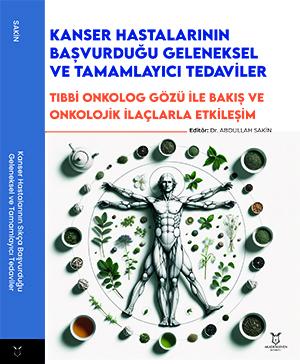
Tanin Demirci H. Zeytinyağı (Virgin Olive Oil). In: Sakin A, editor. Kanser Hastalarının Başvurduğu Geleneksel ve Tamamlayıcı Tedaviler - Tıbbi Onkolog Gözü ile Bakış ve Onkolojik İlaçlarla Etkileşim [Internet]. Türkiye: Academician Publishing Book DOI Portal; 2024 [cited 2026 Jul. 13]. pp. 151-6. Available from: https://omp35.books.akademisyen.net/index.php/akya/catalog/book/2380/chapter/13902